Our Sociology Bookclub delves into the social and historical forces that shape how we live, work, and connect—with each other and the world around us. We read a mix of fiction and nonfiction that explores themes like identity, inequality, institutions, culture, politics, and change. From contemporary novels to groundbreaking research and historical accounts, each book sparks meaningful conversation and fresh perspectives. We strive to foster curiosity, critical thinking, and constructive dialogue in a welcoming, thoughtful space.
Sociology Bookclub |
Every Fourth Wednesday of the Month | 6pm
The Social Science Bookclub runs a little differently than our other groups. Yes, we still pick a monthly lead book, but the conversation tends to be more topic-driven than title-driven.
To keep things fresh and welcoming for different reading styles, we also list a couple of optional “alternate titles” beneath the lead book description. Read the lead pick, read an alternate title, or bring another book that fits the month’s theme—whatever brings you joy.
Join the Sociology Bookclub Discord!
Our Sociology Bookclub Discord is an exclusive space for book club members to continue discussions beyond our in-person meetups. If you loved or hated the monthly pick, want to share additional reads, or just connect with fellow social science book lovers, this is your place!
House Rule: Don’t be a dick. We follow the same respectful and inclusive community guidelines as our in-store discussions.
✨ For bookclub members only.
Where do I get my bookclub book?
Below each book title is a link to purchase through Bookshop.org. In most circumstances, we do not keep mulitple copies of each bookclub book in the bookbar.
Bookshop.org partners with independent bookstores like ours so we can offer e-books, audiobooks, and home delivery—all while keeping money in the indie bookstore ecosystem. If you would like us to pre-order you a copy of a bookclub book to pick up at the bookbar, let us know!
Could you buy the book on Amazon instead? Yep. Free will is a beautiful thing.
Would it be cheaper? Maybe… probably.
But here’s the rub.
We’re a family-owned bookbar in the Fox Cities. We live here. Our staff are basically extended family. We’re not a global conglomerate, and none of us owns a private island for parties.
We’re just trying to keep the lights on, stack the shelves with great books, and keep building a cozy, nerdy space where the community can gather.
So if you choose to buy your next read through us, thank you. Truly. It means a lot that you’d spend a few extra dollars to support a small, quirky neighborhood spot.
Upcoming Books
-
March
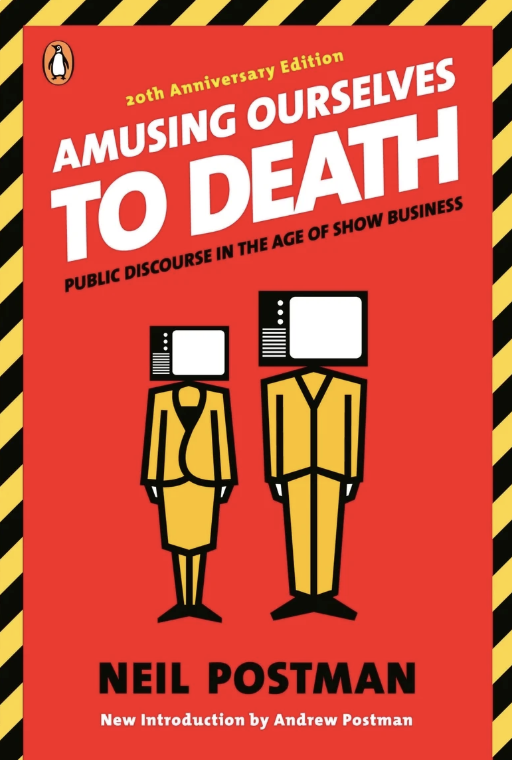
📘 March Pick: Amusing Ourselves to Death
👤 Author : Neil Postman
What happens when media and politics stop informing us… and start entertaining us? Neil Postman asked that question back in 1985, and somehow his warning feels even more accurate now—like he glanced at the future, sighed, and said, “Yep, called it.”
As CNN once put it:
“It’s unlikely that Trump has ever read Amusing Ourselves to Death, but his ascent would not have surprised Postman.”
Postman’s central claim is sharp and unsettling: when television (and now the internet, smartphones, and every glowing rectangle in our lives) becomes the dominant way we receive information, our public discourse reshapes itself to fit the medium. Politics, journalism, education, even religion—everything bends toward entertainment. And the result? A world that looks uncomfortably close to the one Orwell warned us about.
Originally published nearly 40 years ago, this book remains a prophetic, clear-eyed critique of media culture and a guide for how we might reclaim seriousness, truth, and depth in a world obsessed with spectacle.
If you’ve ever wondered why everything feels like a performance—and what we lost along the way—this is your February read. 📺🔍
✨ For fans of…
Media theory & cultural criticism 💭📡
1984, Brave New World, and modern dystopian commentary 📘⚠️
Sociology that explains the “why” behind our chaotic timelines 🧠
Books that challenge how we consume news, politics, and entertainment 🔍
Thought-provoking nonfiction that sparks big discussions ☕👥
⚠️ Topics Included:
Media manipulation & spectacle
Political communication
Public discourse
Technology’s influence on society
The shift from information to entertainment
-
April
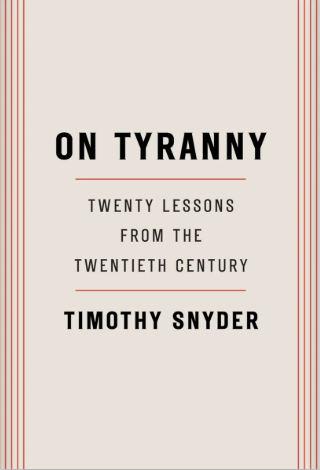
April Sociology Book Club Pick: On Tyranny
Author: Timothy Snyder
What if democracy doesn’t disappear overnight—but erodes slowly, while people convince themselves everything is fine?
In On Tyranny, Timothy Snyder delivers a sharp, urgent guide to recognizing and resisting authoritarianism before it’s too late. Drawing on the lessons of twentieth-century Europe—where democracies gave way to fascism, Nazism, and communism—he argues that we are not immune to similar dangers. History, he warns, doesn’t repeat itself neatly… but it does offer patterns we ignore at our own risk.
The Founding Fathers feared tyranny in the form they understood: the fall of ancient democracies into rule by force. But Snyder suggests today’s threats are more subtle—erosions of norms, attacks on institutions, manipulation of truth, and the quiet normalization of the unthinkable.
Praised by critics and named a #1 New York Times bestseller, this slim but powerful book is designed to be read in one sitting—yet its lessons linger far longer. It’s not just a warning. It’s a handbook. A call to civic responsibility. A reminder that freedom survives only when ordinary people defend it.
If you’ve been wondering what history can teach us about this political moment—and what role individuals play in protecting democracy—this is your April read. 🗳️📚
✨ For fans of…
Political sociology & democratic theory 🏛️
History that illuminates the present 📖
Clear, actionable nonfiction 🔍
-
May
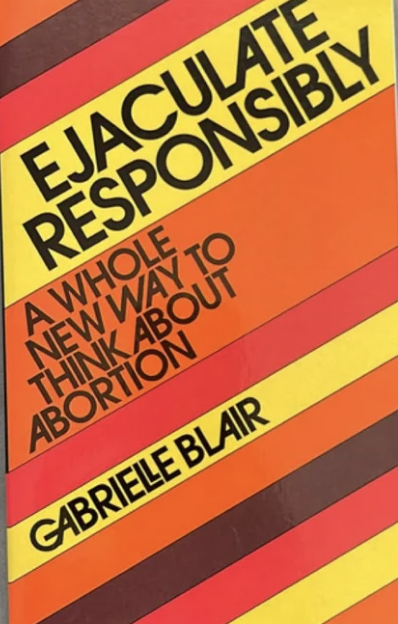
📘 May Sociology Book Club Pick: Ejaculate Responsibly
👤 Author: Gabrielle Blair
What if the abortion debate has been asking the wrong question all along?
In Ejaculate Responsibly, Gabrielle Blair flips the script with 28 sharp, accessible, and often humorous arguments that challenge the way we frame reproductive responsibility. Instead of focusing on controlling and legislating women’s bodies, Blair directs attention to a different—and frequently overlooked—reality: men’s role in preventing unwanted pregnancies.
Walking readers through the basics of fertility, Blair points out a striking imbalance. Men are fertile essentially all the time, while women are fertile only a small window each month. Yet the overwhelming majority of birth control options—and the physical, financial, and social burdens that come with them—fall on women. From the stigma around vasectomies to cultural myths about condoms, she examines how responsibility has been unevenly assigned and rarely questioned.
Highly readable and unapologetically direct, this book reframes a heated political issue as a matter of accountability, public health, and social norms. The result is a provocative and discussion-sparking case for shifting both the conversation and the burden.
If you’re ready for a bold perspective that challenges assumptions about gender, power, and responsibility, this is your May read. 🔎📚
✨ For fans of…
Gender studies & reproductive politics ⚖️
Sociology of family and sexuality 👥
Sharp, argument-driven nonfiction 💬
Books that challenge cultural norms 🧠
Short reads that spark big conversations ☕
⚠️ Topics Included:
Reproductive responsibility
Gender norms & inequality
Birth control access & stigma
Public policy & bodily autonomy
Accountability in sexual relationships
Past Reads
-
![]()
January 2026
-
![]()
Febuary 2026
-
![]()
December 2025
-
![]()
November 2025